The Center for Equine + Nature-Assisted Social Work
WHO WE ARE
Pony Power Therapies’ research arm.
The Center, established in 2025, sits within Pony Power Therapies but functions as a distinct, research-focused center — advancing Equine + Nature-Assisted Social Work through direct programming, structured evaluation, academic partnership, and professional education.
While direct programming is site-based at Pony Power's farm, the Center's research, evaluation, and training reach beyond it. Structured curriculum, standardized assessment tools, and training programs are designed to be shared with schools, organizations, and practitioners regionally and nationally — extending the Center's impact without requiring proximity to horses or nature.
A practice-embedded research center.
WHAT WE DO
The Center is Pony Power Therapies' research arm — a distinct, research-focused center that studies and strengthens equine + nature-assisted social work through direct programming, structured evaluation, academic partnership, and education.
Direct Programming as a Living Laboratory
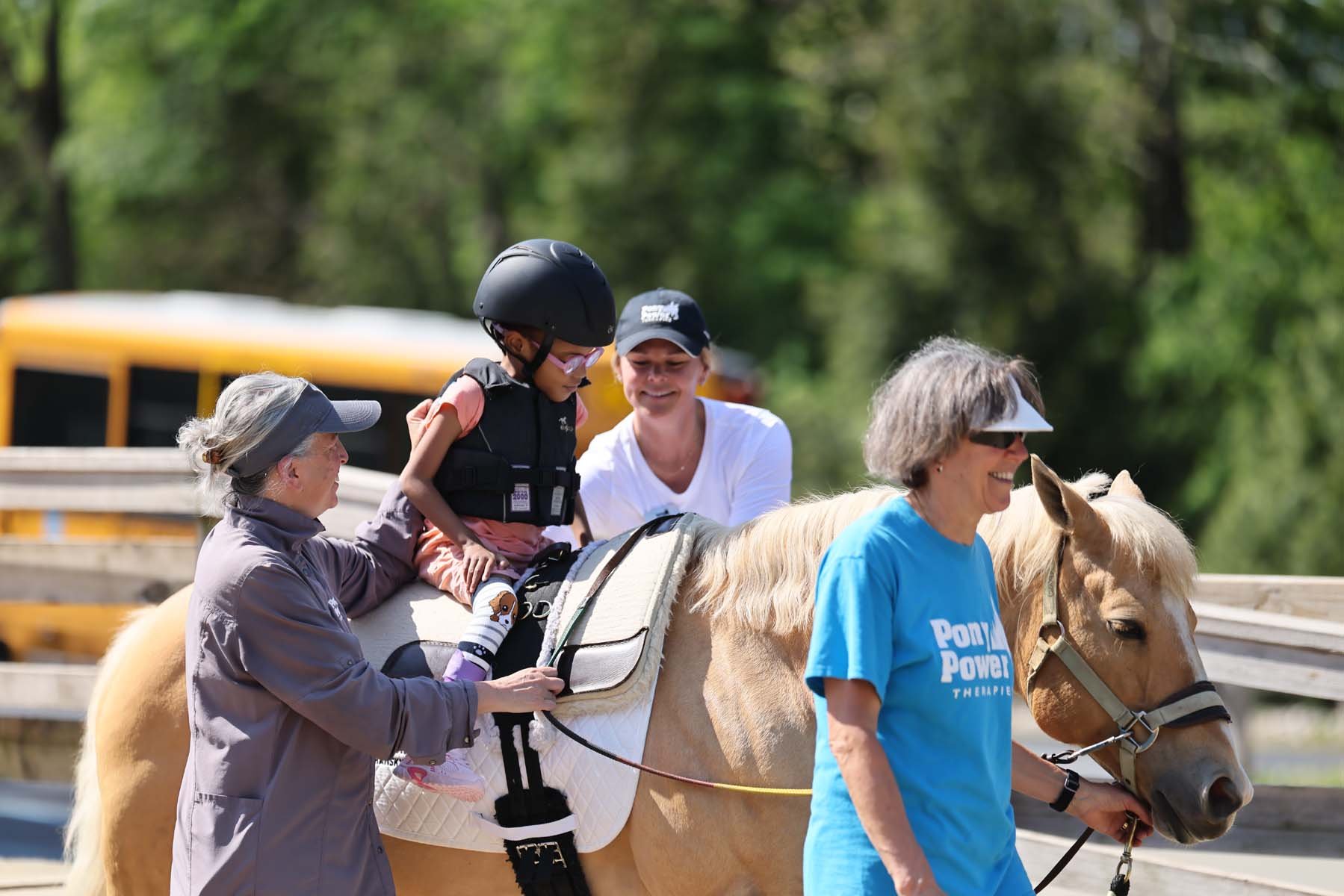
Real-world equine + nature-assisted programming generates the outcome data and practice insight that ENASW is built on, supported by structured evaluation to ensure measurable impact and program quality.
Academic Partnership
The Center partners with Ramapo College of New Jersey to strengthen research design, train the next generation of practitioners, and collaborate across disciplines.
Workforce & Educational Development
The Center provides continuing education for practitioners in the field. Beginning fall 2026, the Center is approved to offer continuing education through Rutgers University.
Research Dissemination
Findings are shared through peer-reviewed publications and conference presentations, contributing to the broader, still-developing evidence base for equine and nature-assisted practice.
RESEARCH AT THE CENTER
Where our programs and our research meet.
The Center's research is grounded in Equine + Nature-Assisted Social Work (ENASW) — a principle-based framework developed by Dana Spett, DSW, and supported by our research team.